Address
234 Lower Gilmore Rd
Campton KY 41301
Work Hours
Monday to Friday: 9AM - 5PM

Address
234 Lower Gilmore Rd
Campton KY 41301
Work Hours
Monday to Friday: 9AM - 5PM

HEir Property. Missing Deeds. Courthouse Fires.
You know what most title companies do when they see Morgan County heir property with a deed chain that dead-ends in 1924? They pass.
We don’t pass. We fix it.
Eastern KY Title brings mobile real estate closings to West Liberty, Cannel City, Ezel, and every hollow in Morgan County—but more importantly, we bring 40+ combined years of Kentucky real estate law experience that actually knows what to do when your property has been “in the family” for three generations and nobody can find Papaw’s will.
Your kitchen table. Our office. We come to you—whether that’s your home on KY 7, your realtor’s office on Main Street, or the break room at ARH Hospital. No glass towers. No corporate runaround. Just experienced title work that respects how things actually work here.
If you’ve ever tried to sell property in Morgan County, you’ve probably hit one of these walls:
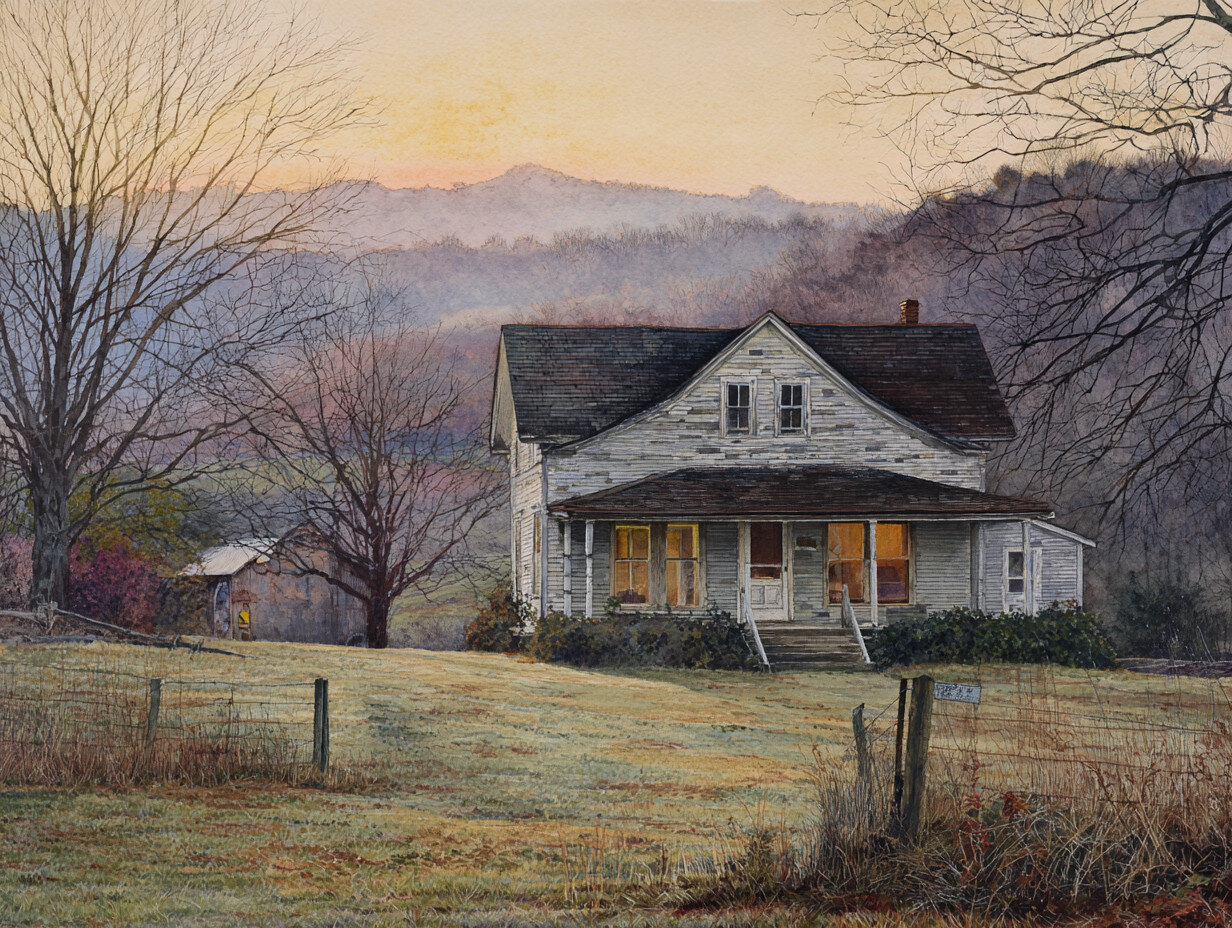
Your grandmother’s house has been in the family since the 1960s. She passed without a will. Now there are 11 cousins scattered from Lexington to Florida, and nobody can agree who owns what. The Lexington title company sent you a “defect letter” and ghosted you.
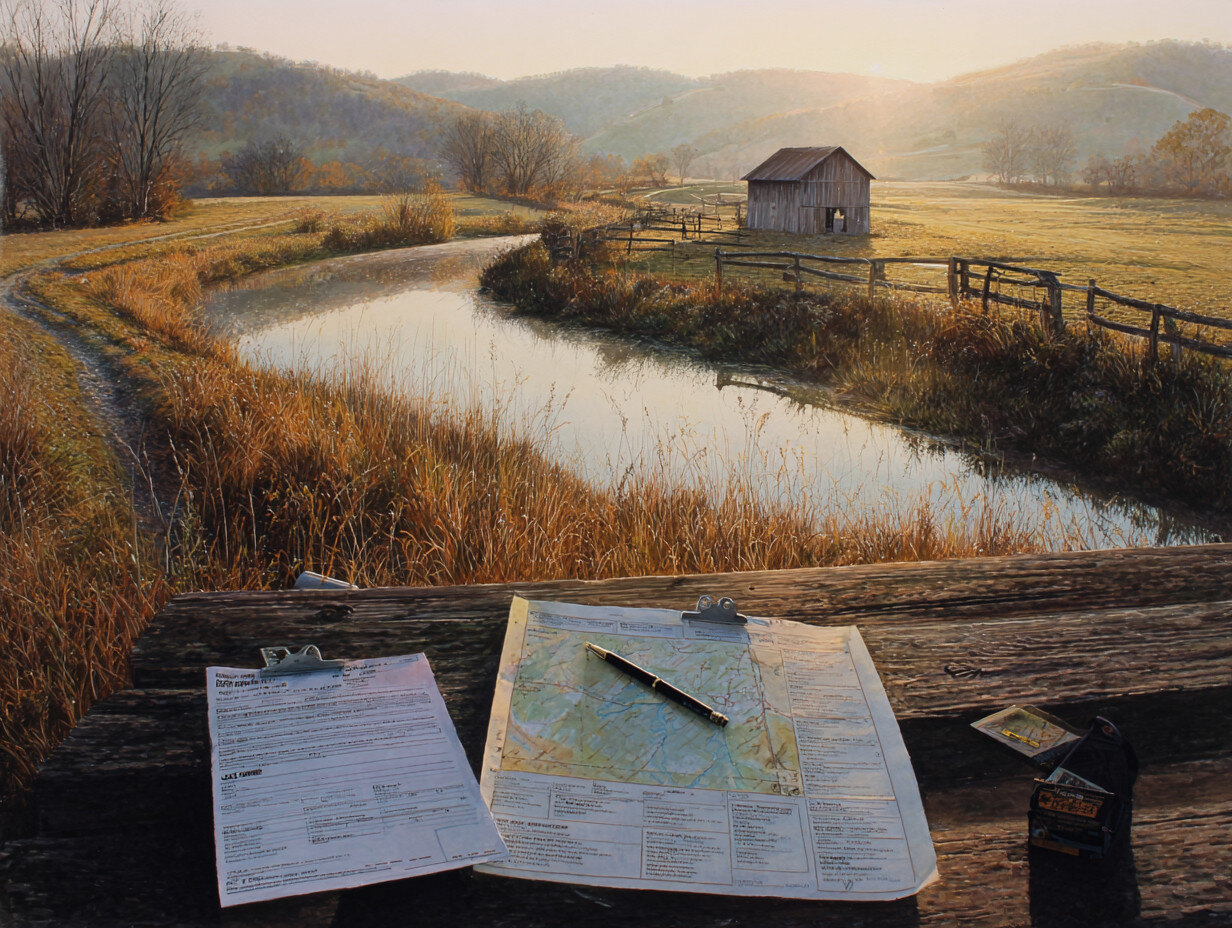
You’re trying to sell land near the Licking River, and the buyer’s lender is demanding flood certification. The FEMA maps changed last year, and you have no idea if you’re in Zone A or AE—or what that even means for insurance costs.

Your attorney is juggling criminal cases, divorces, and probate work—meanwhile, your complex title issue sits on their desk for weeks because they don’t specialize in real estate and don’t have time for courthouse deep-dives.

You know your family owned 40 acres off US 460 since the 1950s, but the courthouse can’t find a recorded deed. Could be the 1925 fire. Could be the 1862 fire. Could be that somebody’s uncle never actually recorded it. Either way, you can’t sell it until somebody figures it out.
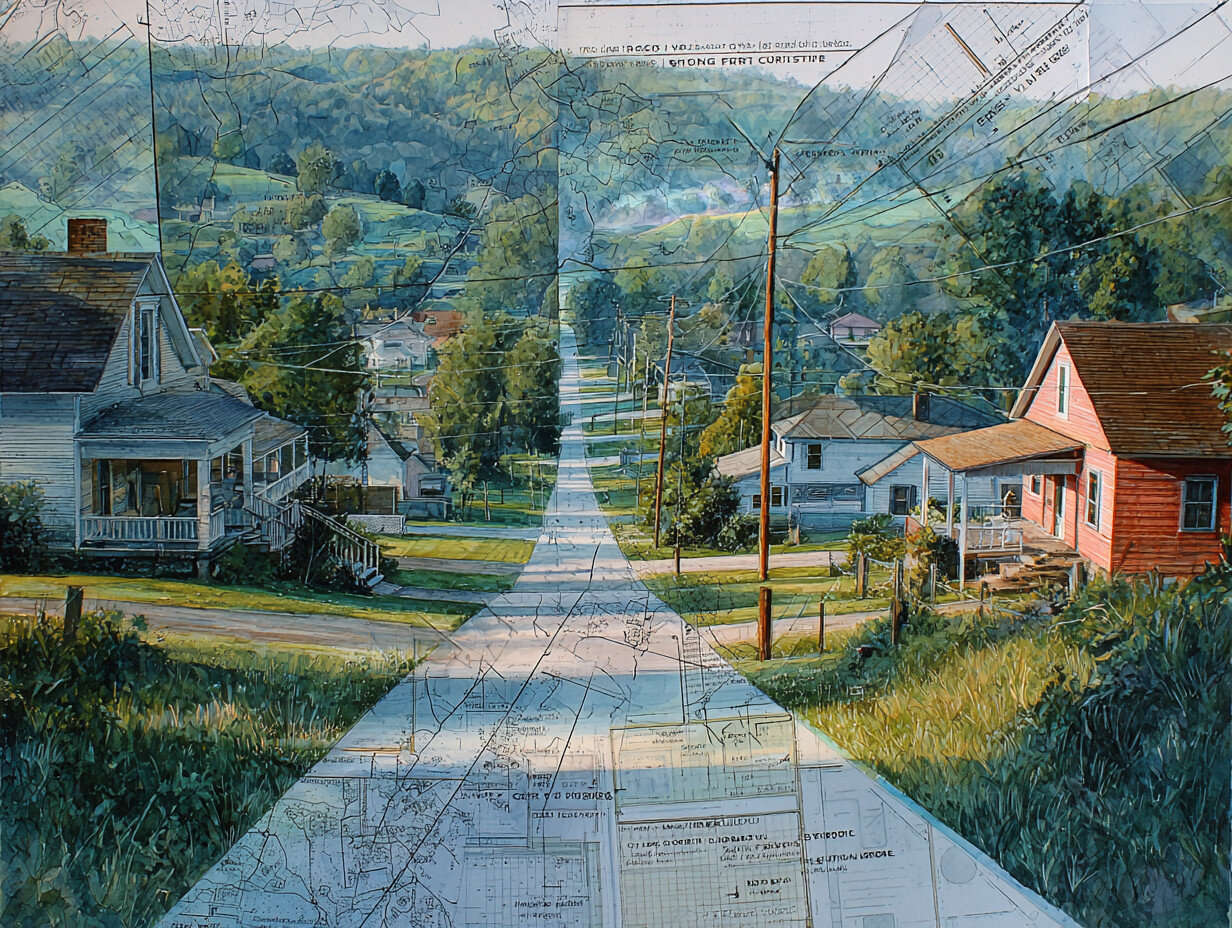
Your property was subdivided or rebuilt after the March 2, 2012 tornado. The lot lines changed. The access easements changed. The regional title company has no idea how to read the reconstruction plats—and frankly, they don’t care enough to learn.
Sound familiar? That’s because Morgan County isn’t a “normal” title county. And you can’t fix these problems with out-of-state software and a 1-800 number.
Let’s be honest about what we’re working with at the courthouse on Prestonsburg Street.
Morgan County suffered two courthouse fires (1862 and 1925), which means deed records before 1925 range from “spotty” to “non-existent.” That’s not unique to Morgan—but it does mean that if your chain of title goes back past the 1920s, we’re doing detective work, not just data entry.
Add to that:
Deed Book 12 uses a different format and has overlapping dates with other books, so the sequence isn’t linear. If you don’t know that going in, you’ll miss instruments.
Grantor/grantee indexes from 1846–1970 are organized by first letter, not full alphabetical order. That slows down searches and increases error risk if you’re not careful.
Pre-1911 birth, marriage, and death records exist in compiled form, but coverage is incomplete. For probate work or heirship affidavits, you can’t assume the courthouse has everything.
The tornado didn’t destroy land records, but it did relocate courts and toll deadlines for months. Filing dates and procedural timelines from that period require extra attention.
This isn’t meant to scare you—it’s meant to explain why hiring someone who’s actually worked in Morgan County matters. The regional firms don’t know about Deed Book 12. The national companies don’t care about the 1925 fire. We do.
Here’s how we’re different from every other title company you’ve talked to.
We come to you. Not as an “upgrade” or a “premium service“—that’s just how we work.
Your closing happens where it’s convenient for you:
No need to take off work. No need to drive to Lexington. No need to coordinate schedules with a corporate office that closes at 4:00 PM sharp.
Why mobile closings matter more here: Morgan County covers 381 square miles of mountain roads. If you live in Mize or Pomp, driving to a title company office in another county isn’t “inconvenient”—it’s a half-day commitment. We know that. So we built our entire business model around not making you do that.
And yes—we serve all 120 Kentucky counties. But Morgan County isn’t just a pin on our map. It’s a place where we understand what it means when somebody says, “The property’s been in the family since before the Doughboy went up.“
Most title companies treat heir property like a hot potato. They’ll run a search, send you a list of 14 people who technically own fractional interests, and wish you good luck.
We don’t do that.
We specialize in title restoration—taking fragmented ownership (think: the Doughboy statue after the 2012 tornado) and piecing it back together into something you can actually sell.
Here’s what that looks like in practice:
Using courthouse probate records, genealogy resources (KYGenWeb, FamilySearch), and old deed references, we build a complete family tree. Even if Grandma died intestate in 1973 and nobody filed an estate.
This is the part where most companies bail. We help facilitate heir agreements—getting everyone on the same page about selling, or buying out disinterested heirs, or clearing up who actually wants to keep the property.
We partner with trusted Morgan County attorneys to handle the legal side—quiet title actions, estate administration, etc. if needed.
The result? Property that was “too messy to sell” gets a clear title, closes, and puts money in your pocket instead of staying stuck in limbo for another decade.
We’ve done this across Eastern Kentucky for 40+ years combined. The process isn’t always fast—but it works. And it beats the alternative, which is watching your family land sit vacant while the tax bills pile up.
If your property is anywhere near the Licking River floodplain, you’ve probably had the “flood zone conversation” with a lender or insurance agent.
Here’s what you need to know:
FEMA flood maps changed. What used to be “Zone C” (minimal risk) might now be “Zone A” (high risk). That affects insurance requirements—and whether certain lenders will even touch the deal.
We can help you figure out where you actually stand:
Bottom line: Don’t list your property until you know your flood status. Finding out at the closing table is too late. Call us at 606-226-0024 and we’ll walk you through it.
We’re not trying to replace your attorney or cut them out. But we close loans—that’s our job.
If your property has legal complications (missing wills, boundary disputes, quiet title needs), your attorney handles those specific issues. We coordinate with them, get the title cleared, then conduct the settlement.
Your attorney doesn’t need to:
They focus on what they do best: legal problem-solving for the complex issues.
We focus on what we do best: title examination and conducting closings.
Everyone works in their lane. Your closing happens faster. And you’re not paying attorney rates for tasks that don’t require a law degree.
morgan county title expertise
You can tell when somebody’s actually from here versus just “covering the territory.” We know about the Sorghum Festival and the mule-drawn press that still runs every September. We know that Index got its name (allegedly) because a postmaster flipped through an index to find something that wasn’t already taken. We know that if you need something done at the courthouse, you ask for Randy.
The March 2, 2012 tornado wasn’t just a weather event—it was a defining moment that rebuilt this town from the ground up. Your courthouse. Your downtown. Your community identity. That same resilience—taking something shattered and putting it back together—is exactly what we do with broken titles.
When heir property is tangled across three generations, or a deed chain dead-ends in a fire-loss year, or boundary lines don’t match the survey—we don’t give up. We dig in, coordinate solutions, and fix it. Because that’s what neighbors do.
Understanding Morgan County’s post-2012 plat changes, reconstruction easements, and how the tornado affected filing procedures. We know which records survived, which were relocated, and how to work around the gaps.
We’re not a regional firm checking boxes from a Lexington office. There’s a difference between “covering” a county and actually knowing how its courthouse works, what went wrong in 1925, and which families own half the land in any given hollow.
You won’t find Morgan County broken down this way on a regional title company’s website. They might list “Morgan County” as a service area and call it done. We actually know the difference between selling property in downtown West Liberty versus a hillside homeplace in Mize—and what title problems to expect in each community before we ever pull the first deed book.
The county seat and commercial hub, rebuilt stronger after the 2012 tornado that leveled the downtown and courthouse. Home to Morgan County ARH Hospital, the historic Doughboy statue, and the September Sorghum Festival that draws thousands each year. If you’re selling property in West Liberty or navigating post-tornado plat changes, we understand the reconstruction easements and updated survey requirements.
Named for the cannel coal deposits that fueled early industry, this unincorporated community sits along the Licking River where US 460 and KY 7 intersect. Many properties here face flood zone questions due to FEMA map changes and proximity to the river floodplain. We help property owners navigate elevation certificates and understand insurance requirements before listing.
A small rural community where family land has often passed down for generations without formal estate administration. Heir property challenges are common here—multiple cousins with fractional interests, missing wills from the 1960s and 70s, and deed chains that require genealogy research to untangle. We specialize in coordinating family agreements and clearing these complex titles.
Tucked into the hills along KY 7, Wrigley represents the rural mountain communities where mobile closings aren’t a luxury—they’re essential. Driving to a title office in another county means a half-day commitment on winding roads. We bring the closing to your kitchen table, whether you’re selling timber land, a family homeplace, or raw acreage.
A hollow community where properties often include severed mineral rights from historical coal operations. Old severances from the 1940s-60s can complicate financing and marketability, even if the minerals were never actually mined. We identify these issues during title search and advise on whether they need to be addressed or can be worked around.
Legend says this community got its name when the postmaster flipped through a book index looking for an unclaimed name—perfectly fitting for a place where deed indexes from 1846-1970 are organized by first letter only, not full alphabetical order. We know how to navigate Morgan County’s quirky record-keeping systems that trip up regional title companies.
Rural farmland and timber property dominate this area, where boundary descriptions often reference long-gone landmarks like “the old white oak tree” or “where the fence used to run.” Survey problems are common when modern GPS measurements don’t match 1950s metes-and-bounds descriptions. We coordinate with local surveyors who understand Eastern Kentucky terrain and historical markers.
Another mountain hollow community accessible via winding county roads, where family land sales often involve out-of-state heirs who inherited property they’ve never seen. We facilitate remote closings, coordinate with scattered family members, and handle the title work that allows these long-distance transactions to actually close without everyone having to return to Morgan County.
The northern edge of Morgan County borders Cave Run Lake and Daniel Boone National Forest, bringing seasonal property owners, recreational land sales, and access easement questions. Properties near federal forest land may have right-of-way issues or restrictions that don’t show up in standard title searches. We know how to research federal land patents and verify access rights for buyers and lenders.
Mobile closings aren’t a premium service for us—they’re standard practice. Whether your property is along US 460 in West Liberty or at the end of a gravel road in Pomp, we’ll bring the closing to your location. No driving to Lexington. No taking half a day off work. Just sign at your own table.
No, Kentucky doesn’t require it—but here’s what sets us apart: we conduct our own closings, and we’re attorneys. That means when we show up at your kitchen table, you’re getting someone who can actually answer your legal questions on the spot, not just witness signatures.
Most big title companies farm closings out to independent contractor notaries (loan signing agents). Those notaries do a great job verifying identity and making sure documents get signed and recorded—but they can’t give legal advice. If you ask “What does this clause mean?” or “Am I responsible for this after closing?”—they legally can’t answer.
When Eastern KY Title conducts your closing, you get both: the convenience of mobile service AND the ability to get your questions answered by someone with legal training. We’re not just there to notarize—we’re there to make sure you understand what you’re signing and feel confident about the transaction.
Title insurance is a one-time premium based on the purchase price. For a $150,000 home, expect roughly $500–$800 for an owner’s policy. We provide exact quotes upfront—no surprises at closing.
Maybe. If the deed was lost, never recorded, or destroyed in a courthouse fire, we can often reconstruct the chain of title using tax records, probate files, and other courthouse documents. It takes extra work, but it’s doable.
This is classic heir property. We help identify all legal heirs, coordinate family agreements, and work with local counsel to clear the title through heirship affidavits or quiet title actions. It’s a process, but we’ve done it hundreds of times.
For a straightforward residential property with a clean chain, usually 5–7 business days. For heir property, old severances, or fire-loss era deeds, plan on 2–4 weeks depending on complexity.
Many Morgan County properties had mineral rights severed decades ago during coal operations. This can affect marketability and financing. We identify these severances during the title search and advise on how to address them (sometimes you can buy them back; sometimes they’re dormant and don’t matter).
Whether you’re dealing with heir property that’s been “in the family” since the 1960s, a deed chain that dead-ends at the 1925 fire, or just a straightforward sale that needs a mobile closing—call us. We’ll tell you if we can help and what the next steps are.
Send your property address and situation. We’ll respond within 24 hours.